Evrotrust goes live in North Macedonia! Here’s everything you need to know.

The digital identity service known as ID operated by Evrotrust is being discontinued. It will be replaced by Evrotrust’s proprietary qualified trust services, offered to end users through a mobile application available in the App Store, Google Play, and App Gallery.

As of April 22, 2024, the ID operated by Evrotrust mobile app and the identification and eSignature services will no longer be available. At the same time, users can find and download the Evrotrust mobile application and gain access to identical services.

Users of ID operated by Evrotrust will no longer be able to use the mobile application. If they decide to uninstall it from their devices, they should download all signed documents to prevent data loss. The new Evrotrust app matches the functionality you’ve come to rely on with ID operated by Evrotrust so you can continue your digital interactions with businesses and government institutions across the EU. The interface is familiar and simple.

Migrating is simple:

  1. Download the Evrotrust app from your mobile app store. Google Play / Apple App Store / Huawei App Gallery
  2. Complete the registration process for the Evrotrust app.
  3. Start eSigning!

Our support team is fully prepared to assist you through this transition. Should you require assistance, please do not hesitate to contact us at office@evrotrust.mk .

Remember, starting April 22, ID operated by Evrotrust will no longer be available, and the application will go offline. We encourage you to make the switch to Evrotrust as soon as possible to continue enjoying uninterrupted service.

A: You will no longer be able to access your ID account. Create a new account in the Evrotrust app. Download Evrotrust and follow the registration process.

A: Yes, you will undergo a quick verification process to ensure your identity is securely created.

A: Absolutely! Evrotrust offers functionality that is accepted by businesses and government institutions across the EU, making your digital identity more versatile than ever. 

Evrotrust Secures a New €3.3 Million Investment

The funding comes at a crucial time when the digital identity landscape is on the brink of significant changes, especially with the forthcoming eIDAS 2.0 regulation.

Evrotrust has recently secured a significant investment of €3.3 million. This development follows our recognition in 2023 as a notified eID scheme by the European Commission, affirming our dedication to pioneering digital transformation and identity verification globally.

From our headquarters in Bulgaria, we’ve grown to become a trusted name in the digital identity sphere, serving over 1.3 million unique users from 58 countries and partnering with 150 enterprises, including 15 of Europe’s top banking institutions. This new funding, contributed by our existing clients and the respected private equity fund Silverline Capital, is set to help us reach even more users and markets around the world.

This investment is earmarked for two main goals. Firstly, it will help us to expand our global presence, bringing our services to more people and businesses. Secondly, it will support the creation of a brand-new product – an innovative digital identity wallet. This wallet will offer a secure place for users to store important documents like identity cards, educational diplomas, and driving licenses, prioritizing user security and privacy while ensuring compatibility with various international digital infrastructures.

“Our latest funding round is a clear sign of trust from those who have experienced the value of our platform firsthand. It’s a boost for our plans to develop further and enter new markets,” said Konstantin Bezuhanov, CEO of Evrotrust. “We’re working on solutions that go beyond the tech industry, aiming to align digital and offline identity uses with the evolving demands of the modern world.”

This funding arrives at a crucial time as the digital identity landscape is set to undergo significant changes, especially with the introduction of the eIDAS 2.0 regulation. It’s a big opportunity for growth, and we’re gearing up for it by expanding our team with highly skilled executives across Europe to lead our innovation and expansion efforts.

Here at Evrotrust, we view ourselves as more than just a tech company. We are facilitators of digital transformation, helping businesses and governments digitize their operations and develop robust digital channels. Our comprehensive solution for electronic identification and signing with qualified certificates allows users to participate in the digital economy securely using just their smartphone.

Our partnership with Silverline Capital, known for supporting businesses with the potential to become industry leaders, reflects their confidence in our vision and our capacity for global impact. As the world increasingly moves online, the role of digital identity verification becomes ever more critical. With this new investment, we’re well-positioned to continue leading the charge in making digital identity verification more secure, user-friendly, and widely accessible.

Breaking Boundaries: Evrotrust Receives Notified eID Scheme Status

As businesses and individuals embrace the advantages of secure digital interactions, Evrotrust is poised to spearhead the transformation of the digital landscape, fostering a future of seamless, secure, and trusted digital interactions in Europe and beyond.

Evrotrust’s electronic identification scheme (eID) has been recognized as a notified scheme and listed in the Official Journal of the European Communities.

What is a Notified eID Scheme?

A notified eID scheme refers to an electronic identification system that has undergone rigorous evaluation and received approval from EU member states, adhering to the standards set forth in the eIDAS (Electronic Identification, Authentication, and Trust Services) Regulation. Enacted in 2014, the eIDAS Regulation aims to create a harmonized framework for secure digital identification and trust services, fostering seamless cross-border interactions and strengthening the single digital market. For further reference, take a look at our eID Scheme Q&A.

Evrotrust’s Remarkable Journey to Notified Status

In May 2023, the European Commission verified Evrotrust’s electronic identification scheme as meeting the requirements of eIDAS. Based on this verification, the Council of Ministers of the Republic of Bulgaria adopted a Decision on 23rd of May 2023, recognizing the Evrotrust scheme as a national scheme and instructing the Minister of e-Government to notify it. The notification procedure was completed on the 5th of July 2023 and the Evrotrust scheme was published in the Official Journal of the European Communities. This entitles Bulgarian and European citizens to obtain electronic access to all public services in the EU through Evrotrust. The status of the Evrotrust eID scheme is available from the official EU list of notified schemes.

What are the advantages of the Evrotrust eID scheme over the schemes of the other EU member states?

The advantages of Evrotrust over other electronic identification schemes are as follows:

  • Evrotrust’s eID scheme provides fully remote registration of individuals and legal entities without physical presence and with maximum security.
  • The Evrotrust scheme is used entirely through a mobile smart device, making it accessible to everyone.
  • The Evrotrust scheme covers levels of assurance “substantial” and “high”, making it one of the most secure electronic identification solutions in the EU.
  • Evrotrust’s eID is the first eID scheme in the EU that enables the electronic identification of individuals and legal entities.
  • The Evrotrust scheme allows it to be used by citizens of 60 different countries, including those outside of the EU. Most other national schemes can only be used by nationals of the country from which the scheme originates.

Take a look at the complete list of advantages of the Evrotrust scheme. 

Navigating the Road Ahead

At Evrotrust, we are committed to leading the way in the ever-evolving digital identity landscape and staying ahead of the curve when it comes to emerging cybersecurity threats and user demands.

Not only do we prioritize innovation, but collaboration lies at the heart of our mission. Working hand-in-hand with governments, businesses, and industry peers is a primary goal for Evrotrust, as we believe it will play a crucial role in shaping the future of digital identity services.

By actively engaging in industry initiatives, we are proud to contribute to the global progress of digital trust and authentication. Together, we are building a more secure and seamless digital world for all.

Mastercard and Evrotrust’s Partnership in North Macedonia – ID Operated by Evrotrust Achieves a New Milestone

Mastercard and Evrotrust have been collaborating under the ID Operated by Evrotrust brand, providing businesses in North Macedonia with a comprehensive digital solution for remote customer identification and e-signing. Thanks to Evrotrust’s secure identity verification and qualified e-signatures, bank clients in North Macedonia can now enjoy faster access to banking services with reduced fraud risk.

ID Operated by Evrotrust has recently announced that UNIBank Skopje has joined its client portfolio. UNIBank is one of the financial institutions that has recognized the value of Mastercard and Evrotrust’s innovative solutions and partnered with them to enhance its digital transformation.

With the integration of ID Operated by Evrotrust’s secure digital identity and legally compliant e-signatures, UNIBank Skopje’s customers can use banking services remotely, without visiting a branch office or signing paper documents. The process of creating a digital identity takes only 2 minutes, and the issued identity certificate can be used limitless times for digital verification online.

ID Operated by Evrotrust offers qualified trust services in accordance with the laws of North Macedonia on Electronic Documents, Electronic Identification, and Confidential Services. Evrotrust ensures the highest level of security when collecting and protecting personal data.

In conclusion, the adoption of ID Operated by Evrotrust’s solution to UNIBank Skopje is a great step forward for the bank and its customers, providing them with more flexibility, security, and faster access to banking services while saving time and financial resources. This partnership is an excellent example of how technology can be used for good, providing new privileges to customers and enabling them to create a legally recognized digital identity and e-signature.

Mastercard’s Solution for Digital Identification Presented before the North Macedonian Government

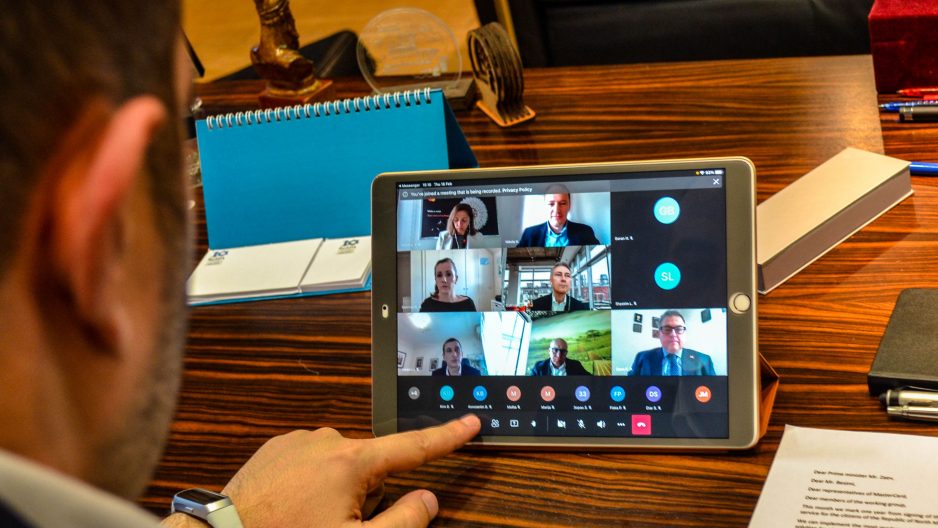
Today, a working meeting was held with the representatives of Mastercard, through a video conference, where the solution for digital identification of the citizens of the Republic of Northern Macedonia was presented.

The working meeting was attended by the Prime Minister of the Republic of Northern Macedonia Zoran Zaev, Minister of Information Society and Administration Jeton Shaqiri, Minister of Finance Fatmir Besimi, as well as senior representatives of the company Mastercard, representatives of the NBRM and representatives of the Financial Intelligence Unit.

“This month marks one year since the signing of the memorandum for establishing a digital identification service for the citizens of the Republic of Northern Macedonia. We can implement state-of-the-art systems for e-services, invest in equipment and software, but without means of electronic identification, we send citizens to the counters as they did decades ago. We live in a time when technology is changing our lives for the better and we should all contribute to that. With the establishment of the digital identification service, the citizens from their homes will apply for the services in the country and the services of the companies in the private sector”, said the Minister Jeton Shaqiri.

Minister Shaqiri pointed out that, using the electronic identification service, public institutions and companies in the private sector will surely know the identity of the person who requested the service and that the same person confirms the implementation of that service, without the possibility of any fraud.

“Digitalization is a process that can create conditions for greater economic growth, growth that we urgently need. Within the Strategy for Recovery and Accelerated Growth (SmartER Growth), according to which we act in order to accelerate economic growth in the country, we recognize and highly value the digitalization of the economy and public services as a prerequisite for accelerated inclusive and sustainable growth. The concept of digital economy is a system of institutional concepts and contains achievements of progressive technologies, and the ultimate goal is to increase the effectiveness of total production by optimizing processes and reducing costs. It is an economy based on professional knowledge, market knowledge, but also creativity and innovative society, “said Minister Besimi.

The Prime Minister of the Republic of Northern Macedonia, Zoran Zaev, emphasized that in this way our country will be part of the world trends:

“With this opportunity, we are making a big and important step in the digitalization of our own identity, which is a prerequisite for many secure network services in the country and in the world.” Namely, the documents that will be signed through this application will be recognized not only in our country, but in all countries in Europe and wherever the electronic ID card service of Mastercard is sold. The solution developed by Mastercard can be used by institutions, but also by business entities that want to take advantage of technology, introduce digitalization of their processes and replace paper and pen with electronic documents, electronic signature and approval via smartphones. “Digital identification will enable any process or procedure that requires a signature and personal presence to be done from home, work or anywhere via mobile phones,” said the Prime Minister of the Republic of Northern Macedonia Zoran Zaev.

This is the first service for electronic identification of citizens and will be available in two months.

Nikola Nikolov from MISA, coordinator of the working group for implementation of the memorandum with Mastercard for the establishment of a digital identification service, and then Paolo Batiston from Mastercard, who is the executive vice president for services in Europe, participated in today’s working meeting. Ivan Hadzov, Business Manager for Digital Product Development for Northern Macedonia, Kosovo and Albania at Mastercard, as well as Georgi Dimitrov, Member of the Board of Directors of Evrotrust.

North Macedonia is Pioneering a Digital Identity Solution in the Public Sector

Macedonian citizens will soon be able to digitally obtain documents from public institutions, remotely open a new bank account, or get a prepaid or postpaid mobile phone account. All of this will be possible with a new project implemented by the Government of North Macedonia and digital payments and services company Mastercard. The country is starting a pilot project that includes a range of solutions that will advance the country’s digital economy aspirations. 

On February 7, Ministers of Information Society and Administration and Finance, Damjan Mancevski and Nina Angelovska signed a Memorandum of Understanding with Mastercard regional manager for Bulgaria, North Macedonia, Albania, and Kosovo – Vanya Manova, which will enable Mastercard to establish a modern digital identity technology in the country.  The service will become available later this year. 

Better experience for citizens and businesses 

Mastercard’s partnership with Macedonian authorities aims to bring local digital identity and related services, like digital document signing and verification, which can be used across a number of day-to-day activities. By opening an application on the mobile device, the users can scan their ID card or passport. That way, the data is being checked and the camera on the mobile device turns on and verifies whether this is the same person. It all happens in real-time. “This means that you no longer need to use flash drives, tokens, paper documents, or have a physical presence for the institution to identify you,” explained Damjan Mancevski, Minister of Information Society and Administration. “Propelling our economy is critical. But to meet our potential, everyone must establish a digital trust service foundation.” 

The Minister of Finance Nina Angelovska expects that this partnership will provide a digital identity service that improves the everyday experience of citizens while increasing the efficiency of public and private services on the road to greater economic growth, noted.  

“Since this solution is interoperable, this means that Macedonian citizens will be able to identify themselves (to digitally stamp different documents, also cross-border) to companies and governments, which are not only in North Macedonia,” explained Vanya Manova, Country Manager for Mastercard Bulgaria, North Macedonia, Albania, and Kosovo. The pilot project in Macedonia is part of a broader initiative of the digital service company MasterCard and similar projects are underway in other countries too. “We have the opportunity to build a digital innovation hub by introducing digital identity services and trusted services that are locally, regionally and globally accepted,” stated Charles Walton, MasterCard’s Vice President for Digital Identity.  

A step closer to EU 

This first-of-its-kind effort will go by the recently created digital identity regulations in North Macedonia and broader European eIDAS (electronic identification, authentication and trust services) standards. Once launched, it will also enable seamless digital interactions between businesses and government agencies across the region and around the globe. “For Noth Macedonia, this is also an important step towards the EU integration as this technology and service are aligned with all EU regulations and will allow citizens to identify themselves in front of any EU country authority. This will also allow business transactions between the Noth Macedonian and the EU businesses,” explain Prof. George Dimitrov, digital identity expert, and member of the board of technology company Evrotrust.

According to him, to make this possible in a bit over a year Noth Macedonia has passed a new digital identification regulation, and also managed to create a centralized e-government portal that allows one point of access to different registers and thus makes the implementation of such a technology possible. 

In the meantime, Bulgaria is also slowly progressing towards offering its citizens and businesses a wide range of public e-services. The main difference, according to Prof. George Dimitrov, is that in Macedonia the process was fast-tracked thanks to political will and that the Macedonian government was open towards private products and e-identification schemes, such as the one offered by Mastercard. 

Q&A
Trending Topics: What are the advantages and what are the challenges that come with implementing this project in North Macedonia?

Charles Walton: The big advantage is saving time, reducing paper, lower-cost ways of interacting. The challenges are bringing together participants – governance, technology providers, banks, mobile network operators – collaboration is never easy. I think the government support here is a great step to reduce that challenge, they have the will and the courage to proceed this way.

How does this project compare with successful and positive examples, such as the Estonian digital identity, for example?         

Charles Walton: In fact, I think it can reach that potential and more, in the sense that Mastercard is doing this locally, but as a part of a global initiative. It can even leapfrog what’s done in Estonia by the very fact that we are globally interoperable. I think that’s a great benefit in advancing the digital economy in North Macedonia. 

Do you believe that countries in the Western Balkans have the necessary capacities when talking about handling sensitive and personal information, as envisioned in the project?

Vanya Manova: Absolutely, we believe that the Western Balkans are the right region, and that’s why we are here. Even though North Macedonia is not the biggest country in the region, we, as one of the biggest international companies, are investing our time, money and technology here, because we see the potential. We also see the willingness of the Government and the Central Bank to implement and introduce all these changes in the legislation, which protect the customers the most. 

Does Mastercard have similar partnerships and do you plan similar initiatives elsewhere in the Balkans?

Vanya Manova: This is the first partnership between Mastercard and a government in terms of digital identity. I truly believe that this will be a great showcase for all the other countries across the Balkans, but not only. We will make this showcase available to the entire world, since it is very relevant everywhere. 

Mastercard Designes National Digital Identity Service to Help Grow Digital Economy of the Republic of North Macedonia

Partnership to Build on International Standards, Framework

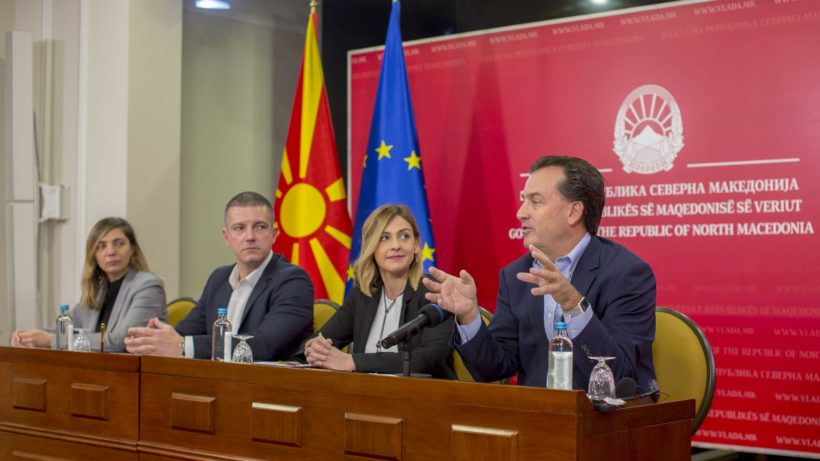
The Government of the Republic of North Macedonia and Mastercard today unveiled plans for a range of digital solutions that will advance the country’s digital economy aspirations and give citizens a new way to prove their identity when accessing government and business services.

The partnership is intended to bring local digital identity and related services – like digital document signing and verification – that Macedonian citizens can use across a number of day-to-day activities. Among the first applications are electronic “Know Your Customer” activities to support remote opening for new bank accounts, without visiting a branch in person, and new prepaid and postpaid mobile phone accounts.

“Technology is changing our lives in ways we could have only dreamed just years ago,” said Ajay Bhalla, president of cyber & intelligence for Mastercard. “The best solutions come by bringing together strong partners. That’s why we’re pleased to work with the Macedonian government to address real problems for their citizens. With this service, they can use a digital identity for public services, while maintaining control of their information with security, privacy and trust.”

This first-of-its-kind effort will build on the recently created digital identity regulations in North Macedonia and broader European eIDAS (electronic identification, authentication and trust services) standards. Once launched, it will also enable seamless digital interactions between businesses and government agencies across the region and around the globe.

“Propelling our economy is critical. But to meet our potential, everyone must establish a digital trust service foundation,” said Damjan Mancevski, minister of Information Society and Administration.

“This partnership will provide a digital identity service that improves the everyday experience, while increasing the efficiency of our public and private services on the road to greater economic growth,” said Nina Angelovska, Minister of Finance.

The partnership will promote open collaboration with governments, banks, mobile network operators, universities and other partners to shape the services. In addition to the digital identity service, Mastercard will also support other e-government initiatives and promote related best practices from other geographies.

The Macedonian/Mastercard digital identity service is based upon a distributed model that eliminates the need for a centralized identity database. It builds on Mastercard’s consumer-centric approach outlined in a Principles of Digital Identity vision paper that prioritizes privacy-by-design.

Value of Public-Private Partnerships

According to a recent World Economic Forum white paper, collaboration across the public and private sectors offers the potential to create new models of secure, useful digital identity that build on a commitment to the responsible handling of personal information, giving consumers control over which data is used and how it is used.

Governments around the globe are already working on a wide range of digital identity initiatives, ranging from specifying standards to developing applications and infrastructures.

Mastercard’s efforts with North Macedonia are part of a broader effort to support the transformation of how individuals, businesses and governments interact online. This initiative aligns closely with the company’s partnership with the French government to accelerate the digitization of the country’s economy, along with other strategic collaborations as announced with educational and government institutions in Australia. Further partnerships and pilots will be introduced throughout 2020.

To learn more about Mastercard’s vision for digital identity and ID, visit www.idservice.com